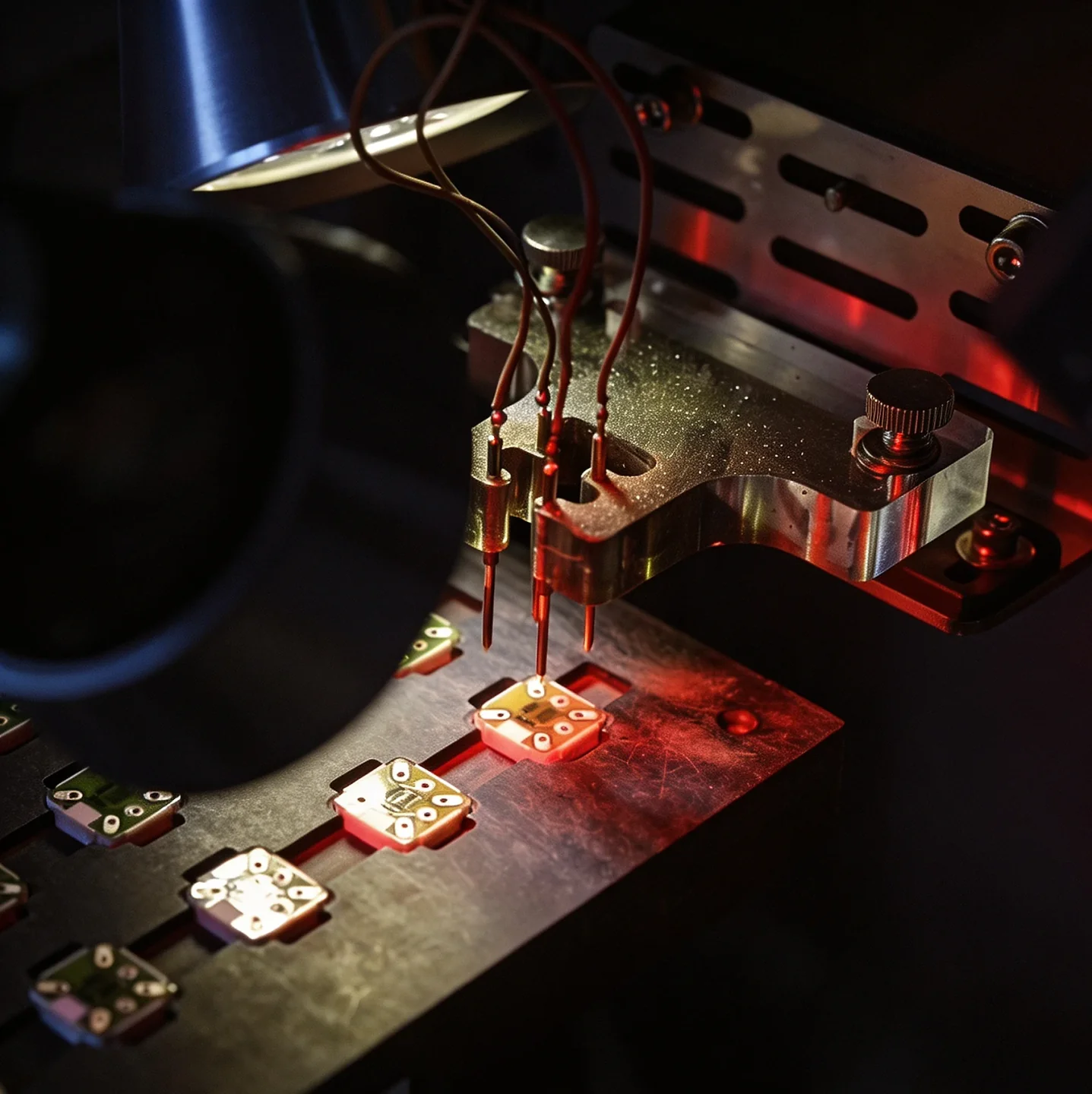
Tire Pressure Monitoring Sensor Application
A tire-pressure monitoring system (TPMS) turns tire-pressure status into data that an onboard processor can interpret, then warns the driver when a threshold or fault condition is reached. For sensor suppliers and equipment OEMs, pressure calibration, temperature effects, communication status, and traceable test records also need validation in fixtures and service equipment.
System Architecture and Data Boundary
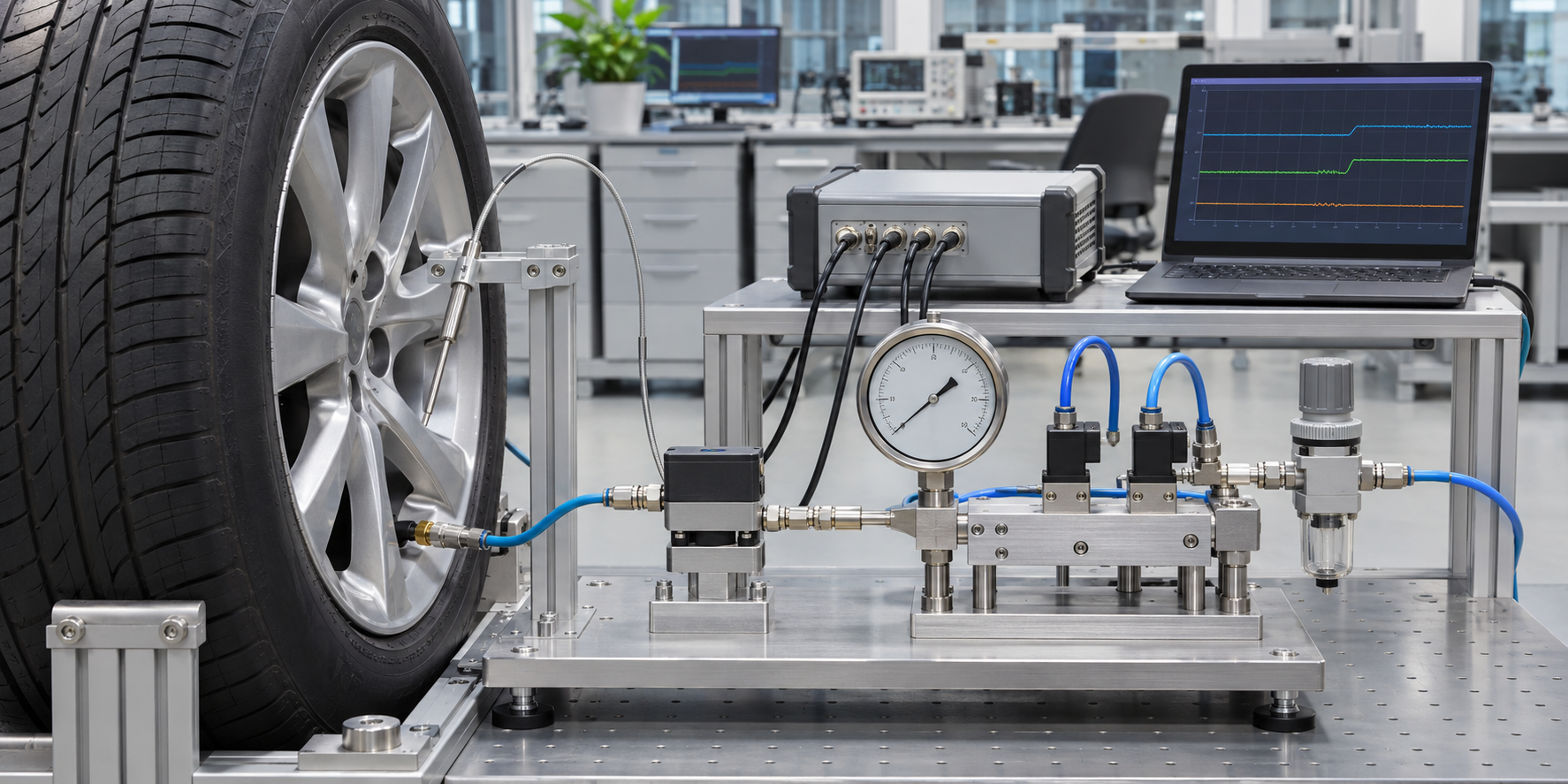
A direct TPMS uses sensors in the tire to measure pressure, while an indirect system can infer tire status from wheel-speed and other vehicle signals. An onboard processor interprets the data and drives the dashboard warning. This note focuses on measurement paths in sensor test fixtures, calibration equipment, and fleet-service tools; current CMS industrial pressure products are not presented as in-tire TPMS modules or vehicle-certified parts.
Test Fixtures and Measurement Tasks
A test bench should keep the pressure source, device under test, reference reading, temperature condition, and communication receiver in one traceable record. Pressure points compare the setpoint with the device result, temperature points record the chamber or ambient condition, and a digital gauge or independent reference provides a cross-check. Each test should retain module ID, pressure unit, temperature, timestamp, power or battery state, communication result, and fault code.
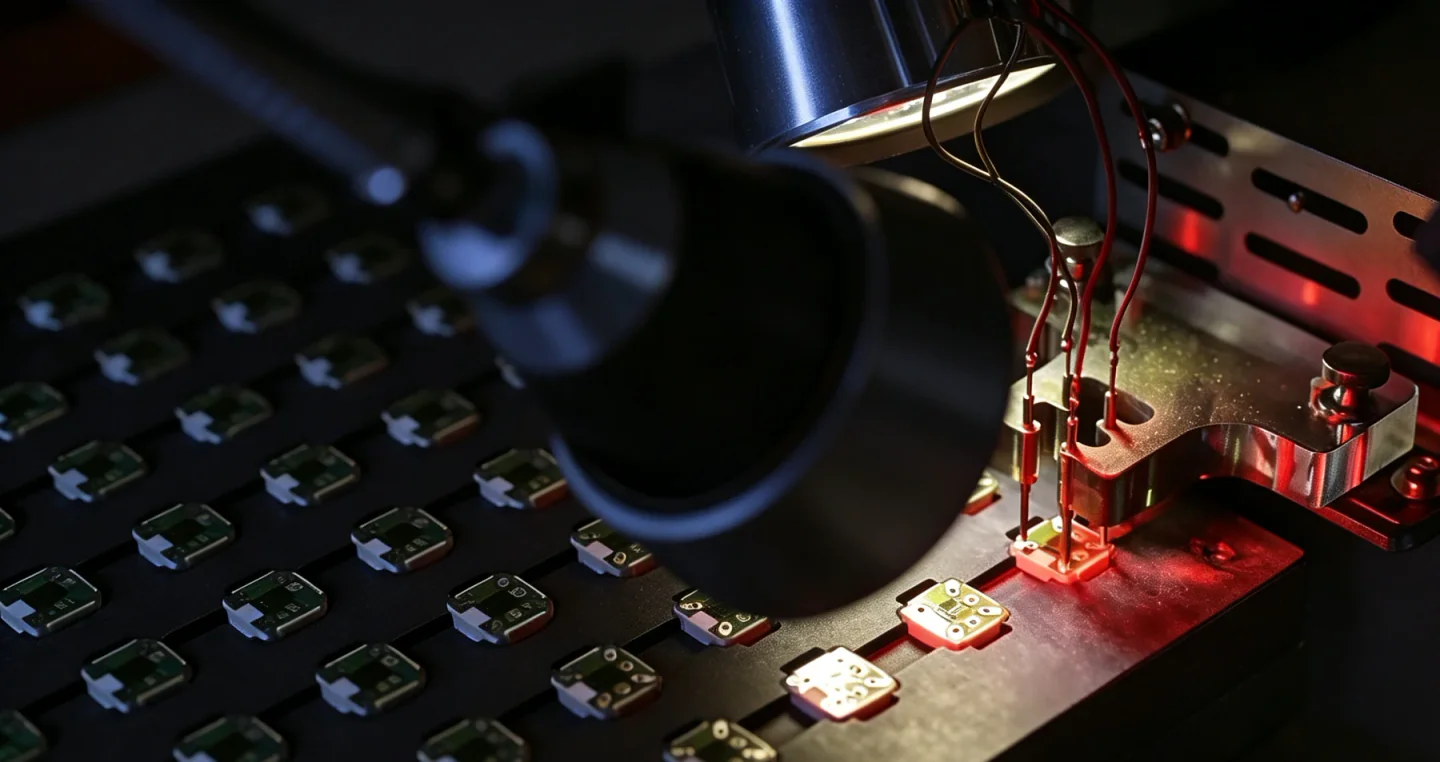
- Pressure calibration: apply multiple points from the test plan and record pressurization, hold, and return behavior.
- Temperature effect: place ambient or chamber temperature alongside pressure on the same timeline.
- Communication validation: distinguish no data, delay, invalid value, and a true low-pressure warning.
Product Fit and OEM Boundaries
The MPS0315 pressure sensor can be evaluated as a measurement point in a TPMS fixture or pressure-calibration tool. The D10E digital pressure gauge can provide local indication and an independent cross-check. The T20 temperature sensor can record chamber, ambient, or equipment temperature. When used in test equipment, all three still require checks for range, pressure or temperature type, connection, output, power, medium, installation envelope, and calibration; this does not mean that they have completed in-tire, wireless-protocol, or vehicle-regulatory validation.
- Prototype stage: confirm fixture sealing, interfaces, reference instrument, and device-under-test mounting.
- Production stage: confirm calibration interval, incoming inspection, traceability, and release rules.
- Project stage: separate the sensor candidate from the OEM responsibilities for wireless, software, and regulatory work.
Validation Records and Compliance Boundary
Validation records should include test pressure, temperature, time, module or fixture ID, reference value, device result, communication status, warning threshold, and fault handling. For production vehicles in a specific market, the vehicle or system owner must complete separate compliance review against applicable regulations, OEM requirements, and the test plan; fixture data does not replace vehicle certification or road validation.
For the next TPMS engineering step, compare the TPMS test pressure sensors, review temperature sensing options, check local pressure verification tools, and follow the OEM validation workflow with the test plan and responsibility matrix.