
Smart Pressure Controllers
Smart Pressure Controllers products for industrial measurement and OEM selection.
Product List
2 products
Ordered by category and product shape
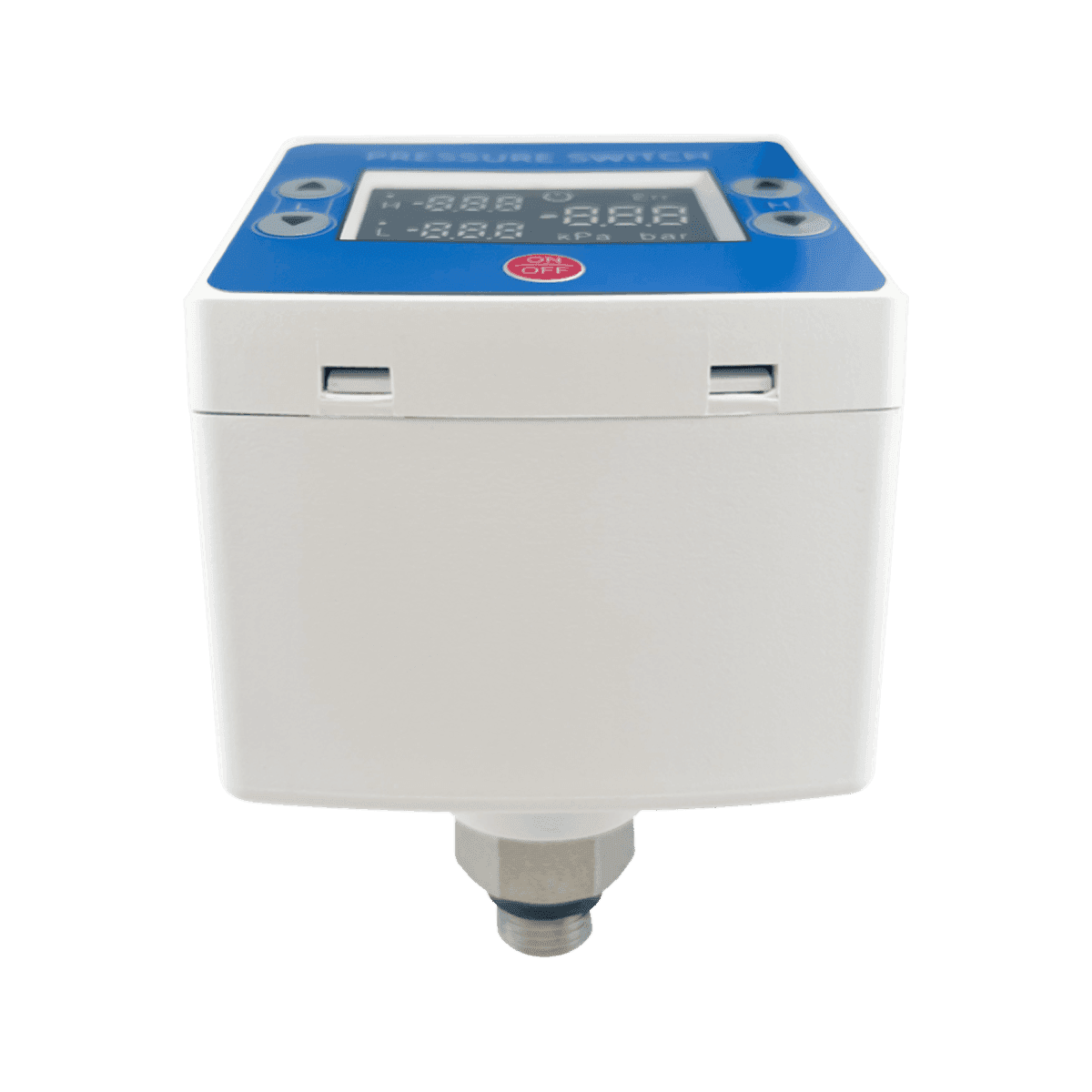 Quote required
P520 Smart Pressure Controller
- Setting range
- −101.3 to +0 kPa / −100 to +1000 kPa / 3.0–1.6 MPa
- Process connection
- G 1/4
- Accuracy
- ±1 %FS
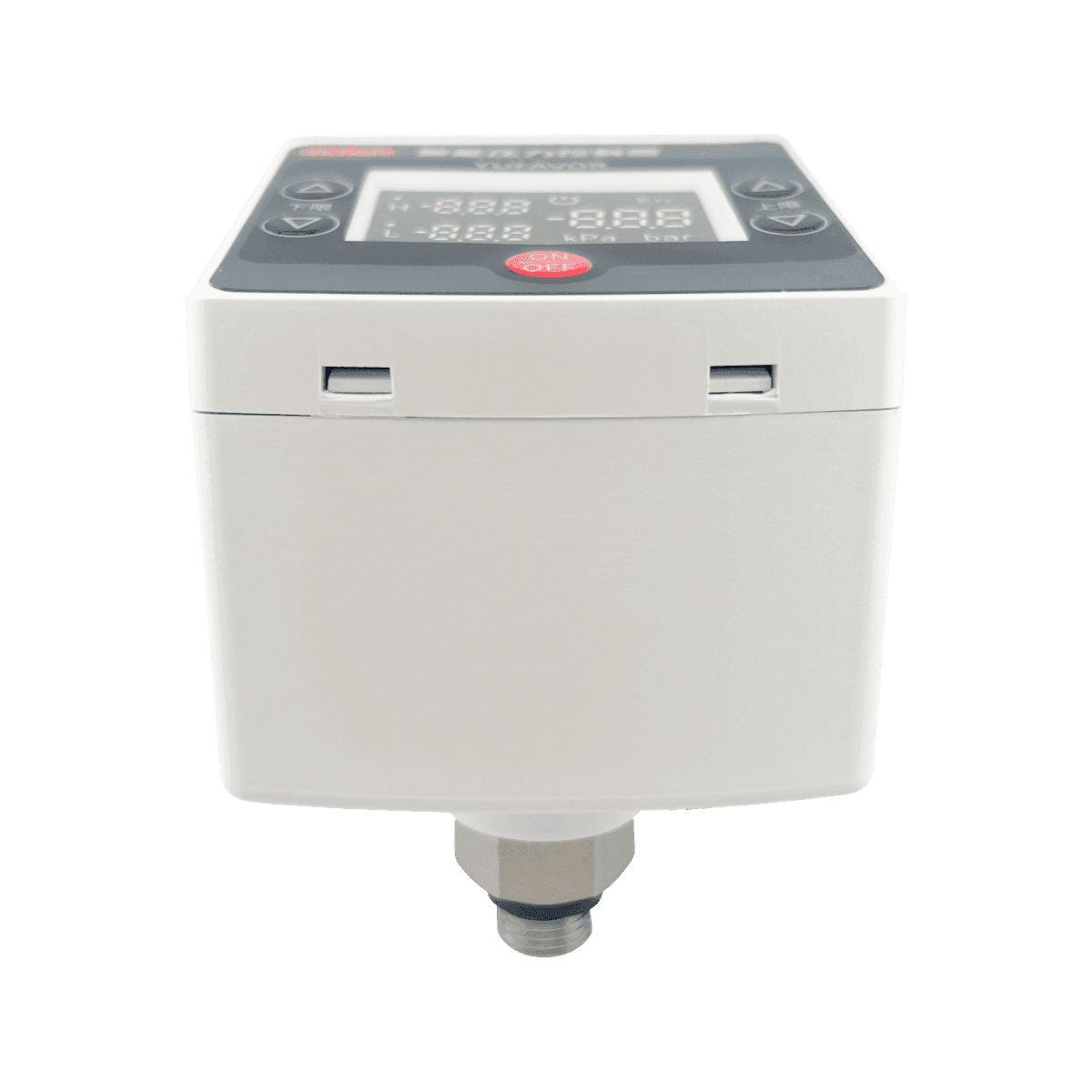 Quote required
PC20 Smart Pressure Controller
- Ingress protection
- IP54
PC20 Smart Pressure Controllers for industrial measurement and control applications. Datasheet is archived for model selection, specification review, purchasing communication, and maintenance records.
View DetailsMODEL COMPARISON
Smart Pressure Controllers — Quick Specification Comparison
SELECTION GUIDE
Smart Pressure Controller & Electronic Pressure Switch Selection Guide
Smart pressure controllers combine real-time digital display, programmable switching setpoints, and optional analog/RS-485 feedback in one compact unit.
1. Define Switching Load & Output Type
Choose PNP/NPN transistor outputs for direct PLC digital inputs or high-capacity relay contacts for direct pump, solenoid valve, and alarm control.
2. Configure Hysteresis & Delay Timers
Adjustable deadband (hysteresis) and switch delay prevent rapid relay chattering caused by pressure pulsations during pump cycling.
3. Check Need for Simultaneous Analog Feedback
Many models provide 1–2 programmable switch points plus a simultaneous 4–20 mA or 0–10 V output for continuous SCADA trending.
4. Verify Enclosure & Visibility
Bright LED/OLED displays and rotatable housings simplify commissioning inside tight hydraulic cabinets and booster-pump skids.
Smart Pressure Controllers FAQ
Why choose a smart electronic pressure controller over a mechanical pressure switch?
Electronic controllers offer much higher repeatability, millions of switching cycles without mechanical spring fatigue, push-button setpoint adjustment, and live digital pressure readout.
Can a smart pressure controller directly drive a pump or solenoid valve?
Relay-output models can directly switch pilot relays, contactors, or low-power solenoid valves within their rated contact current; for high-power motors, always drive an intermediate contactor.
How do I prevent rapid on/off cycling in pump pressure control?
Set an appropriate hysteresis band between cut-in and cut-out pressure plus an output delay timer to dampen hydraulic spikes.