
Temperature and Humidity Sensors
Temperature and Humidity Sensors products for industrial measurement and OEM selection.
Product List
2 products
Ordered by category and product shape
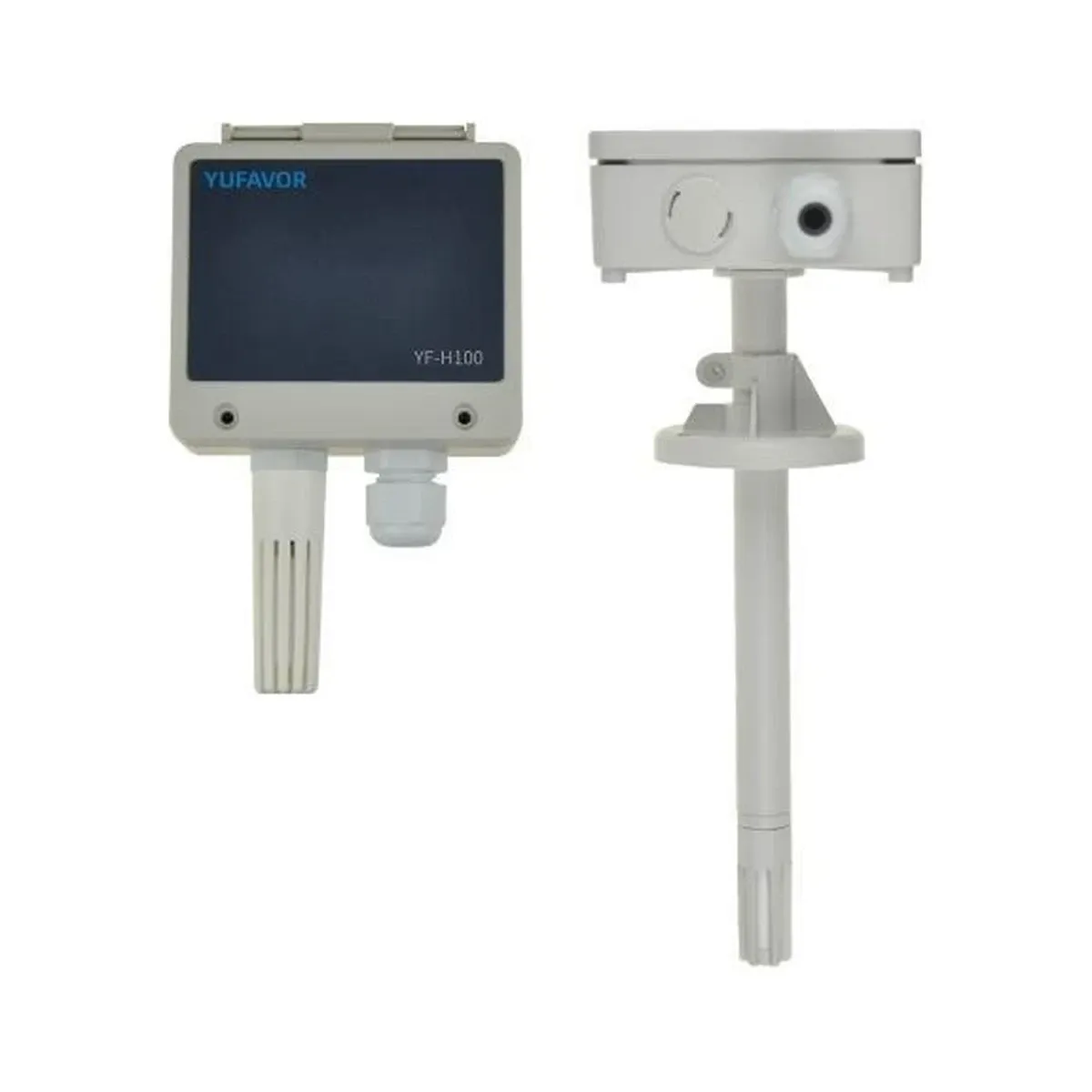 Quote required
H100 Temperature and Humidity Sensor
- Output signal
- 4–20 mA / RS-485
- Accuracy
- ≤±3 %RH / 20 %RH / 80 %RH
- Supply voltage
- 12–32 VDC · +1 options
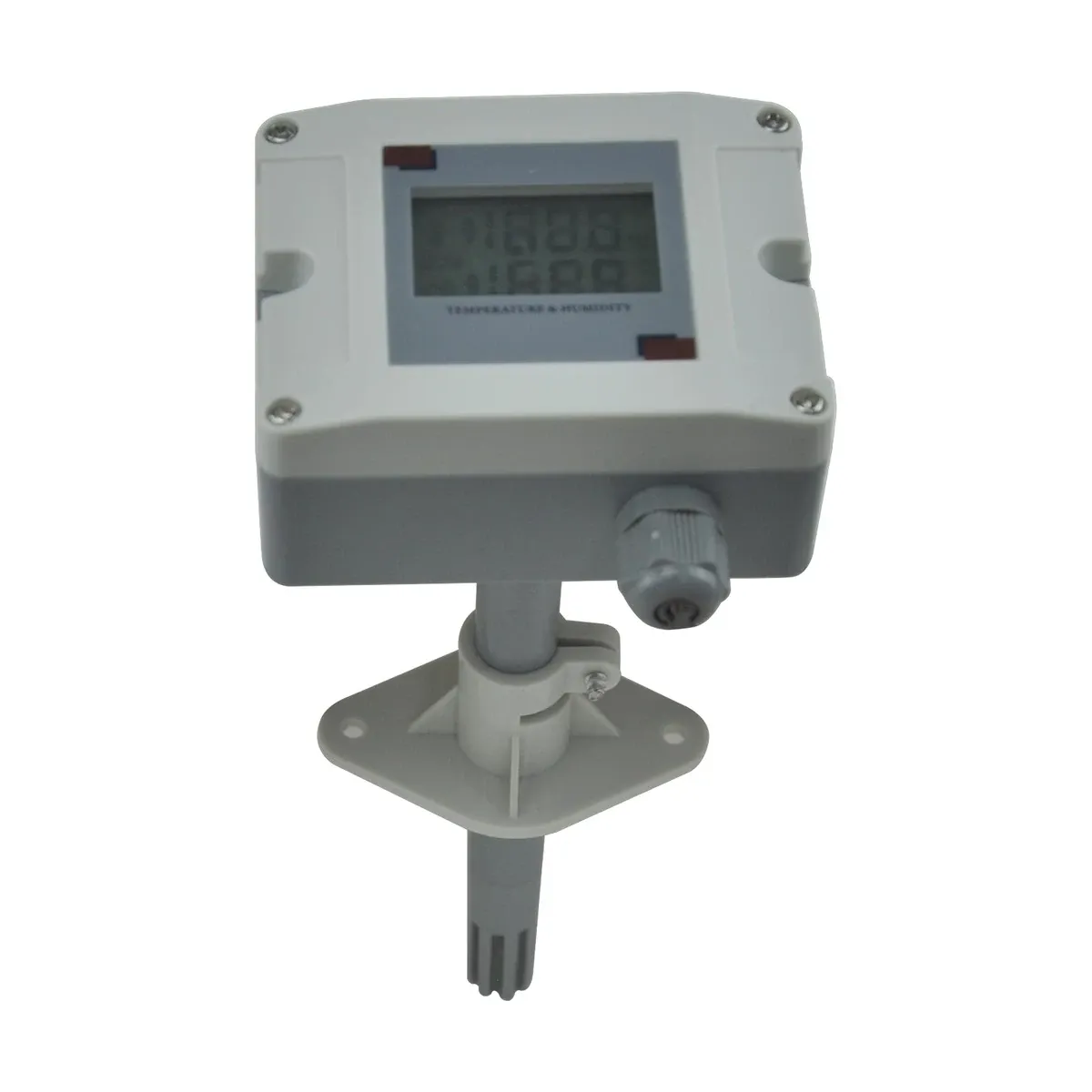 Quote required
H200 Temperature and Humidity Sensor
- Output signal
- 4–20 mA / RS-485
- Accuracy
- ≤±3 %RH / 20 %RH / 90 %RH
- Supply voltage
- 12–32 VDC · +1 options
MODEL COMPARISON
Temperature and Humidity Sensors — Quick Specification Comparison
SELECTION GUIDE
Industrial Temperature & Humidity Sensor Selection Guide
Accurate ambient and duct humidity monitoring depends on condensation resistance, sintered filter protection, and stable digital/analog communication.
1. Select Mounting Style: Wall, Duct, or Split Probe
Wall-mount enclosures fit warehouses, server rooms, and labs; duct-mount probes serve HVAC air handlers; remote probes withstand high-temperature drying chambers.
2. Check Humidity & Temperature Accuracy
Verify ±2% RH / ±3% RH humidity accuracy and ±0.3 °C / ±0.5 °C temperature tolerances across your operating envelope.
3. Protect the Sensing Element from Dust & Condensation
Sintered stainless steel or PTFE breathable filter caps prevent oil mist, dust, and water droplets from contaminating the capacitive humidity chip.
4. Choose Analog or RS-485 Modbus Output
RS-485 Modbus RTU reads both temperature and humidity over a single bus; dual 4–20 mA or 0–10 V outputs connect to legacy analog BMS inputs.
Temperature and Humidity Sensors FAQ
How does one RS-485 sensor transmit both temperature and humidity?
Both measured parameters are mapped to separate Modbus RTU holding registers so a PLC or BMS gateway can poll multiple daisy-chained sensors over one twisted-pair cable.
Can industrial temperature and humidity sensors handle dusty workshops?
Yes, when equipped with stainless steel sintered or hydrophobic PTFE filter caps that block particulates while allowing vapor exchange.
What power supply is typically required?
Standard industrial units operate on 12–32 VDC (commonly 24 VDC) with reverse-polarity protection.